Recovery is rarely a straight line. It's a journey filled with victories, setbacks, unexpected lessons, and moments that require more courage than most people realize. While everyone's path is unique, one thing remains true across countless recovery stories: no one succeeds by relying on willpower alone.
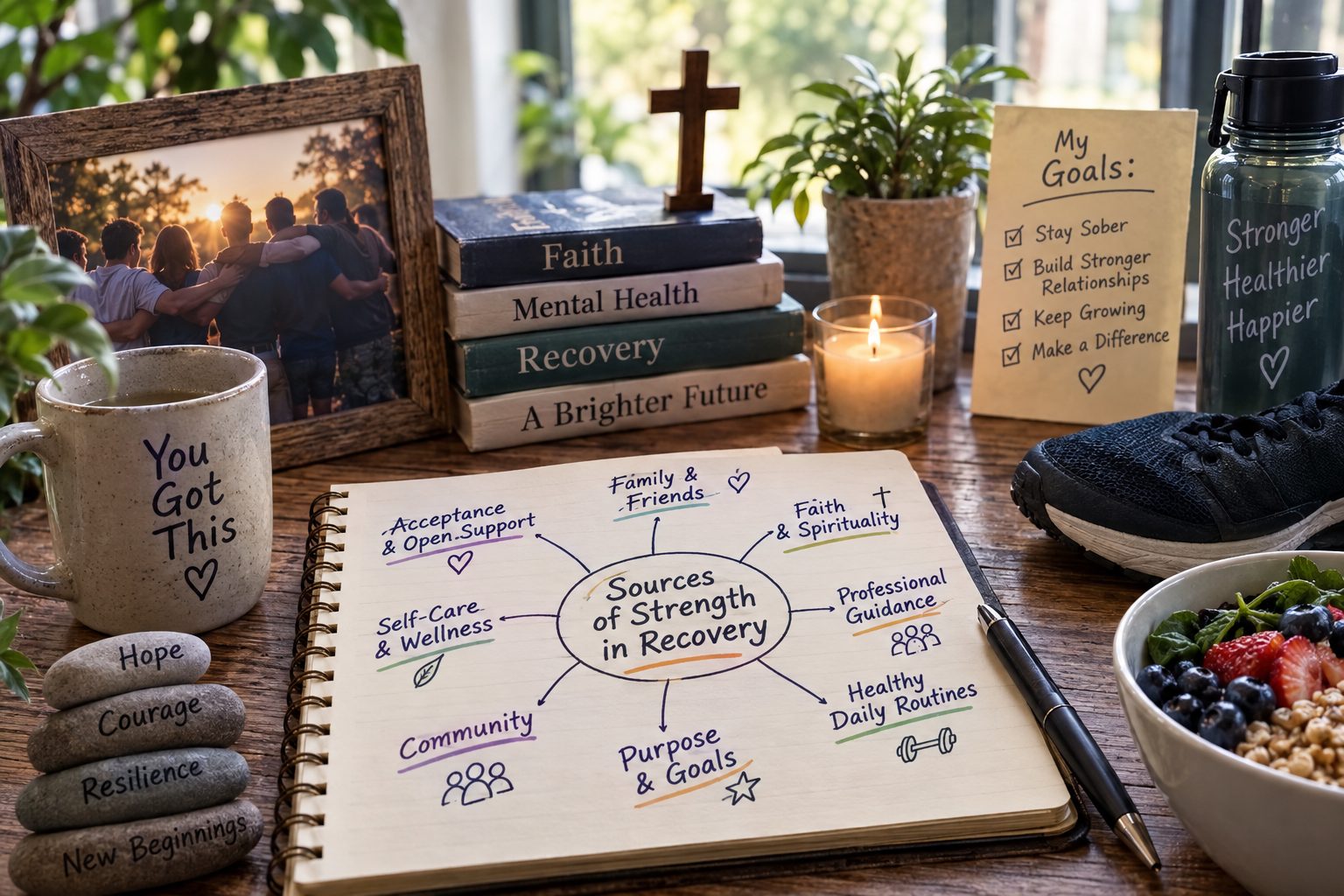
People draw strength from many different places throughout recovery. For some, that strength comes from family. Others find it in friendships, personal beliefs, professional guidance, or a renewed sense of purpose. What matters most isn't that everyone follows the same path—it's that they discover the support systems that help them keep moving forward.
As conversations around mental health and addiction continue to become more open, it's clear that recovery is about more than simply avoiding harmful substances. It's about rebuilding a life that feels meaningful, connected, and worth protecting.
In This Article
- The Power of Human Connection
- Finding Strength Through Personal Beliefs
- Healthy Daily Routines Build Confidence
- Learning to Accept Help
- Purpose Creates Motivation
- Physical Wellness Supports Emotional Healing
- Community Helps Reduce Isolation
- Hope Grows Through Progress, Not Perfection
- Different Paths Can Lead to the Same Goal
- Building Inner Resilience Over Time
- Final Thoughts
The Power of Human Connection
One of the strongest sources of encouragement during recovery is genuine human connection.
Addiction often creates isolation. Relationships become strained, trust is broken, and many individuals begin to feel disconnected from the people around them. Recovery offers an opportunity to rebuild those relationships one step at a time.
Supportive family members, trusted friends, mentors, or peers who have experienced similar challenges can provide something incredibly valuable: hope. Simply knowing someone believes in your ability to change can make difficult days easier to manage.
Meaningful conversations, accountability, and shared experiences remind people they don't have to face recovery alone.
Finding Strength Through Personal Beliefs
For many individuals, personal beliefs become an important foundation during recovery.
Whether rooted in spirituality, religious traditions, or a broader sense of purpose, these beliefs often provide comfort during uncertain moments. They encourage forgiveness, patience, gratitude, and resilience—qualities that are essential when rebuilding a healthier life.
Many people discover that faith-based addiction treatment aligns with their values because it combines recovery principles with spiritual growth. Rather than focusing solely on overcoming addiction, this approach encourages individuals to reconnect with hope, compassion, and a deeper sense of meaning.
While this path isn't the right choice for everyone, countless individuals find strength through their faith during the recovery process.
Healthy Daily Routines Build Confidence
Strength doesn't always come from dramatic breakthroughs.
Sometimes it grows quietly through everyday habits.
Making the bed in the morning.
Preparing healthy meals.
Taking a walk after work.
Reading before bed instead of scrolling through social media.
Attending scheduled meetings.
Getting enough sleep.
These small routines create stability. Over time, consistency builds confidence, and confidence helps people make healthier decisions even when life becomes stressful.
Recovery is often built one ordinary day at a time.
Learning to Accept Help
Many people entering recovery believe they have to solve everything on their own.
That belief can become one of the biggest obstacles to long-term healing.
Accepting support isn't a sign of weakness. It takes courage to admit when guidance is needed.
Professional counselors, recovery groups, mentors, healthcare providers, and trusted loved ones all play different roles in helping someone navigate challenges. Every conversation, every encouraging word, and every shared experience adds another layer of strength.
No one expects someone recovering from a physical injury to heal without assistance. Recovery from addiction deserves the same understanding.
Purpose Creates Motivation
One of the most powerful questions people ask during recovery is:
"What am I working toward?"
Recovery becomes more sustainable when individuals begin focusing on building a meaningful future rather than simply escaping the past.
Purpose looks different for everyone.
For some, it's becoming a better parent.
For others, it's returning to school, starting a new career, volunteering, pursuing creative hobbies, or repairing important relationships.
Having goals provides direction during difficult moments. Even small accomplishments reinforce the belief that positive change is possible.
Physical Wellness Supports Emotional Healing
The connection between physical and emotional health is impossible to ignore.
Exercise, balanced nutrition, hydration, and quality sleep all influence mood, stress levels, and overall well-being.
While healthy habits don't replace emotional support, they often make recovery more manageable by improving energy and reducing everyday stress.
Many people find confidence simply by taking better care of themselves. Feeling physically stronger often contributes to feeling emotionally stronger as well.
Community Helps Reduce Isolation
Recovery thrives in environments where people feel accepted.
Communities can take many forms.
Support groups.
Faith communities.
Volunteer organizations.
Sports clubs.
Creative workshops.
Neighborhood groups.
Online recovery communities.
These spaces remind individuals that their identity extends far beyond addiction. They become places where people can share experiences, celebrate milestones, and encourage one another without fear of judgment.
A strong community often becomes one of the most dependable sources of motivation over time.
Hope Grows Through Progress, Not Perfection
One common misconception is that recovery means never making mistakes again.
Real recovery is much more realistic.
It's about learning from setbacks instead of being defined by them.
Every positive decision—even a small one—builds momentum.
Choosing honesty.
Keeping an appointment.
Asking for help.
Managing stress in healthier ways.
Showing kindness to yourself after a difficult day.
Progress accumulates over time, creating lasting change that rarely happens overnight.
Different Paths Can Lead to the Same Goal
Recovery isn't one-size-fits-all.
Some individuals benefit from structured counseling.
Others find motivation through peer support.
Many discover healing through creative outlets like music, writing, or art.
Some are drawn toward faith-based addiction treatment, where spiritual principles become part of the recovery journey. Others find strength through mindfulness practices, community involvement, or personal development.
The most effective recovery path is the one that helps an individual remain committed to long-term wellness while meeting their unique emotional, physical, and personal needs.
Respecting different approaches allows more people to find the support that truly resonates with them.
Building Inner Resilience Over Time
One of the greatest outcomes of recovery isn't simply overcoming addiction.
It's developing resilience.
Each obstacle overcome teaches valuable lessons about patience, determination, and self-awareness.
People often discover strengths they never realized they possessed.
They become more compassionate.
More emotionally aware.
More appreciative of healthy relationships.
More intentional about the choices they make every day.
Whether someone draws inspiration from family, supportive communities, personal values, or faith-based addiction treatment, every positive influence contributes to building a stronger foundation for the future.
Final Thoughts
Recovery is deeply personal, and no two journeys look exactly alike. The strength people rely on can come from many different sources, including loved ones, supportive communities, healthy routines, meaningful goals, professional guidance, and spiritual beliefs.
The important thing is recognizing that lasting recovery doesn't depend on a single source of motivation. Instead, it grows through a combination of support, resilience, and consistent daily choices.
For many individuals, faith-based addiction treatment becomes one meaningful part of that foundation, offering hope and purpose alongside practical recovery efforts. Others find encouragement through different avenues that reflect their own values and experiences.
Whatever the path, recovery is strengthened when people feel connected, supported, and empowered to continue moving forward—one day, one choice, and one step at a time.