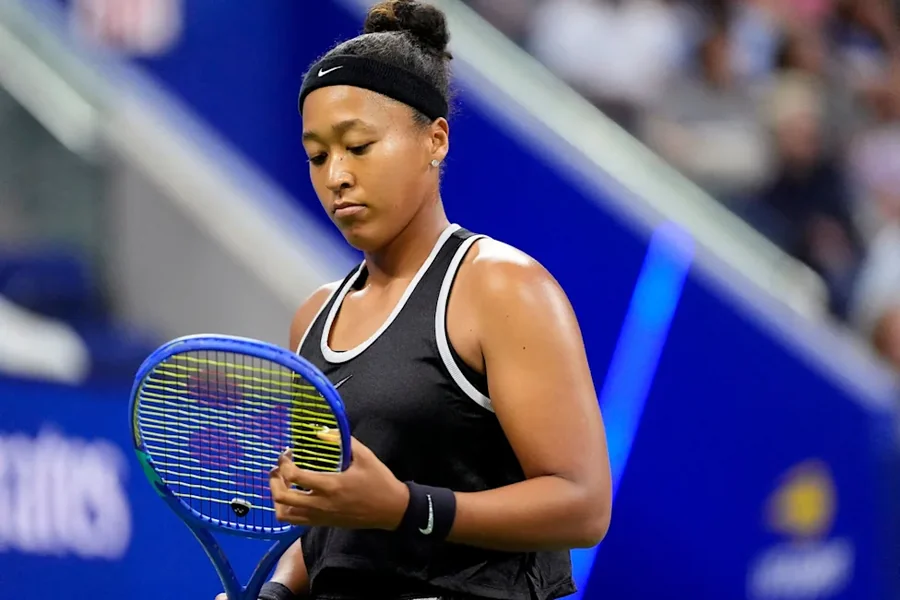
Naomi Osaka does not behave like the conventional version of a sports celebrity. She rarely fights for the center of attention, does not fill interviews with polished slogans, and often looks more comfortable discussing anime or video games than explaining her place in tennis history. Yet she became one of the most recognizable athletes of her generation before turning 25.
Her results explain part of that rise. Osaka won four Grand Slam singles titles, reached world No. 1, and became the first Japanese player to win a major singles championship. Her power from the baseline made her dangerous, especially on hard courts, while her ability to stay composed in decisive moments separated her from many talented rivals. Sporting success, however, does not fully explain her reach. Plenty of champions remain famous mainly among people who follow their sport.
Osaka became a broader celebrity because her life connected several stories at once. She was born in Japan to a Japanese mother and Haitian father, raised in the United States, and represented Japan. She defeated her childhood idol in a controversial final, used her clothing to protest racial violence, challenged the media rules of professional tennis, disclosed her struggles with depression and anxiety, built businesses, and returned to competition after becoming a mother. Each chapter complicated the public’s understanding of her.
Her celebrity therefore grew from more than winning. It came from the tension between private discomfort and public influence. Osaka did not appear to seek a symbolic role, but people repeatedly made her a symbol: of modern Japan, mixed identity, female earning power, athlete activism, and mental-health awareness. Her most interesting story is how she learned to use that position without allowing it to consume her.
In This Article
Three Countries and an Unusual Family Plan
Naomi Osaka was born on October 16, 1997, in Osaka, Japan. Her mother, Tamaki Osaka, came from Hokkaido, while her father, Leonard François, came from Haiti. Their relationship faced opposition from Tamaki’s family, a conflict that exposed Naomi to questions about race and belonging long before she had the language to discuss them publicly. Naomi and her older sister, Mari, carried their mother’s surname, which was practical while the family lived in Japan and later became one of the most recognizable names in sports.
The family moved to the United States when Naomi was three. They first lived with Leonard’s parents on Long Island, New York. A few years later, they relocated to Florida so the sisters could train in a stronger tennis environment. Naomi grew up mainly in America, but her parents maintained her ties to both Japan and Haiti. That combination would later make her identity commercially attractive and personally complicated.
Leonard built the family’s tennis plan after watching Venus and Serena Williams. Richard Williams had developed two champions without following the traditional route through elite junior competition. Leonard saw a model he could study. He had little formal tennis experience, but he watched videos, learned the sport, and began coaching Mari and Naomi. His reasoning was direct: another father had found a path, so he could adapt it.
The comparison with the Williams family was ambitious to the point of improbability. Tennis training requires court time, travel, equipment, coaching, and years of work before a family knows whether a child can earn a living from the sport. Tamaki worked long hours to support the household while Leonard concentrated on the girls’ development. The sisters were homeschooled and trained on public courts before moving deeper into the professional system. Their parents committed to a result that might never arrive.
Mari became Naomi’s first measuring stick. Naomi has spoken about losing to her sister for years and counting those defeats. The imbalance gave the younger player a specific target. She was not initially trying to become a global icon or win a famous trophy; she wanted to beat Mari. That rivalry helped turn repetition into purpose. Every practice session offered a chance to narrow a gap she understood personally.
Her identity attracted questions as her ranking rose. Osaka lived in the United States and spoke English more comfortably than Japanese, yet she represented Japan from an early age. Her parents said the decision reflected her birthplace, her mother’s nationality, and the family’s sense of connection to Japan. When Japanese law required her to choose a nationality before turning 22, she gave up her US citizenship and retained Japanese citizenship.
Public discussion often tried to divide Osaka into neat percentages: Japanese, Haitian, or American. Her experience did not work that way. Japanese audiences could view her as a national champion while still debating whether she behaved or spoke as they expected a Japanese athlete to behave. American audiences recognized her cultural references and upbringing, but she did not compete under the US flag. Her Black identity connected her to experiences that were not always visible or openly discussed in Japan. She belonged to each world without fitting perfectly inside any of them.
That mixture shaped her personality in public. Osaka was known for shy interviews, long pauses, unexpected jokes, and answers that sometimes sounded as though she was discovering her thoughts while speaking. The same manner that could make a press conference awkward also made her relatable. Fans saw a young woman navigating attention rather than a media product delivering rehearsed lines. Her interests in manga, anime, gaming, fashion, and photography added dimensions that had little to do with rankings.
The Victories That Made Her Impossible to Ignore
Osaka’s early game contained obvious force. She could serve at high speed, take control with her forehand, and hit through opponents from the baseline. Consistency took longer. Her breakthrough arrived at Indian Wells in 2018, where she defeated a series of accomplished players to win her first WTA title. Her nervous acceptance speech became almost as memorable as the result. She stumbled through her thanks, acknowledged the awkwardness, and allowed the moment to remain imperfect.
The 2018 US Open changed the scale of her fame. Osaka reached the final at 20 and faced Serena Williams, the player whose career had inspired her father’s plan. Osaka had admired Serena since childhood. The match therefore carried a private emotional weight before the controversy began.
Osaka played with control and won in straight sets, but the final became dominated by a dispute between Williams and chair umpire Carlos Ramos. Ramos issued Williams violations for coaching, racket abuse, and verbal abuse, with the penalties eventually costing her a game. The crowd at Arthur Ashe Stadium responded angrily. By the trophy ceremony, boos filled the arena even though Osaka had produced the best tennis of the night.
Osaka lowered her visor and cried. She apologized because she understood that much of the crowd had wanted Williams to win. Serena put an arm around her and asked spectators to stop booing. The scene was painful, confusing, and historically important. Osaka had become the first Japanese player to win a Grand Slam singles title, yet she could not celebrate freely.
That ceremony introduced millions of people to the quality that would define Osaka’s public image: visible strength mixed with visible vulnerability. She had just defeated one of the greatest players in history on one of tennis’s largest stages. At the same time, she looked like a young fan who felt guilty for spoiling someone else’s desired ending. The contrast made her victory more memorable than a routine celebration would have been.
Osaka confirmed her status at the 2019 Australian Open. She defeated Petra Kvitová in a demanding three-set final, won a second consecutive major, and rose to world No. 1. The title removed any reasonable claim that her US Open victory had resulted from chaos around her opponent. She had survived pressure, lost championship points in the second set, recovered emotionally, and controlled the deciding set.
Her hard-court excellence returned during the 2020 US Open. The tournament took place without normal crowds because of the COVID-19 pandemic, giving the event a strange, enclosed atmosphere. Osaka recovered from losing the first set of the final to beat Victoria Azarenka. She added the 2021 Australian Open title several months later, defeating Jennifer Brady in the final. At that point, Osaka had won four of the first four major finals she played.
Those achievements placed her among the defining players of her era, but celebrity formed in the spaces around the matches. Her fashion choices carried meaning. Her social posts combined blunt opinions with playful comments. Her interviews lacked the smooth rhythm common among athletes trained to avoid controversy. Even a room filled with plain walls and restaurant chairs could become interesting when Osaka began answering questions because nobody knew whether she would offer a short sentence, an unexpected joke, or a revealing admission.
Seven Masks and the Decision to Speak
Osaka’s 2020 US Open campaign turned clothing into a sequence of public statements. Before each match, she entered the court wearing a black mask printed with the name of a Black victim of racial violence. Across seven rounds, she displayed the names of Breonna Taylor, Elijah McClain, Ahmaud Arbery, Trayvon Martin, George Floyd, Philando Castile, and Tamir Rice.
The plan contained its own competitive pressure. Osaka had prepared seven masks, so using all of them required reaching the final. Each victory gave another name to an international audience. After she won the tournament, she said her purpose was to make people begin talking. Families of some of the victims thanked her, a response she found deeply emotional.
The masks joined parts of Osaka’s identity that commentators often treated separately. She was not speaking only as a Japanese athlete, an American resident, or the daughter of a Haitian man. She was speaking from all three positions. Her visibility in Japan carried the issue of anti-Black violence into a society with a different history and public vocabulary around race. Her tennis success made it difficult for sports coverage to ignore the message.
Osaka had already shown that her protest was more than visual branding. After police shot Jacob Blake in Wisconsin, she withdrew from a semifinal at the Western & Southern Open. The tournament paused play for a day, and Osaka later competed after organizers supported the wider protest. Her decision challenged the familiar demand that athletes remain politically neutral while leagues and sponsors profit from their personalities.
The response exposed a recurring feature of her fame. Supporters viewed Osaka as thoughtful and courageous. Critics accused her of bringing politics into sport or speaking on issues outside Japan. The disagreement increased her reach. She was no longer simply a successful player with an appealing story. She had become someone whose choices could set an international news agenda.
Osaka created a different kind of debate at the 2021 French Open. Before the tournament, she announced that she would not participate in press conferences because of their effect on athletes’ mental health. Tournament officials fined her after her first-round victory and warned that continued refusal could lead to further penalties. She then withdrew from the event.
Her explanation changed the terms of the dispute. Osaka revealed that she had experienced periods of depression since the 2018 US Open and suffered anxiety when speaking with the media. She acknowledged that her announcement could have been communicated better, but she rejected the assumption that every athlete should accept every traditional media obligation regardless of its psychological cost.
The issue was not simple. Journalists argued that press conferences support public accountability, storytelling, and the commercial system that funds professional sport. Other athletes noted that media duties are part of the job. Osaka’s critics questioned whether a star could claim the benefits of publicity while avoiding difficult questions. Her supporters answered that an old rule should not automatically override a person’s health.
Osaka’s influence came partly from making the disagreement unavoidable. She did not solve the relationship between athletes and reporters, but she forced governing bodies to defend their practices and discuss possible changes. She also gave other athletes permission to describe anxiety, depression, and burnout without presenting those experiences as failures of character.
The Tokyo Olympics placed her under another form of pressure. Osaka lit the Olympic cauldron at the opening ceremony, one of the most prominent honors Japan could give an athlete. The image confirmed her status as a national and global symbol. She then lost in the third round of the singles tournament. The sequence demonstrated the impossible scale of expectation around her: she was asked to embody a changing country and then perform normally a few days later.
Building a Career Larger Than Tennis
Osaka became commercially valuable because she offered more than a winning record. She connected Japan and the United States, spoke to younger fans, carried credibility in fashion, and had a personal style that brands could recognize immediately. Her Japanese heritage opened relationships with major companies in one of the world’s richest consumer markets. Her American upbringing made her familiar to Western audiences. Her Haitian background and activism gave her public identity a depth that a marketing campaign could not invent.
Major endorsement income turned Osaka into one of the highest-paid female athletes in the world. The achievement mattered beyond a ranking of wealthy sports figures. Women’s team sports have historically offered fewer high salaries than men’s leagues, making endorsements especially important for female stars. Osaka showed that a woman in an individual sport could build global commercial power without following the personality model previously expected of brand ambassadors.
Fashion played an important role in that process. Osaka treated clothing as a form of storytelling, from competition outfits to luxury campaigns and her 2021 Met Gala appearance. The Met Gala look, created with Louis Vuitton and developed with input from her sister Mari, drew on Japanese and Haitian influences. It presented identity as layered rather than requiring Osaka to select one cultural reference.
Osaka also began shifting from endorsement to ownership. She co-founded Evolve, a talent representation company, and Hana Kuma, a media company created to tell culturally specific stories. The name Hana Kuma combines Japanese words commonly translated as “flower” and “bear.” These businesses allowed her to support other athletes and creators while gaining greater control over production, representation, and revenue.
The transition reflected a larger change in athlete careers. Previous generations often relied on agents, sponsors, broadcasters, and publishers to build opportunities outside sport. Modern stars can operate their own media channels, invest in companies, and create brands while still competing. Osaka entered that model early, but she approached it with a clear concern about who owns the story. After years of having others debate her nationality, personality, and obligations, ownership offered practical control.
Motherhood introduced another shift. Osaka announced her pregnancy in January 2023 and gave birth to her daughter, Shai, that July. She returned to professional competition at the start of 2024. The comeback required physical recovery, technical rebuilding, travel planning, and acceptance that her past level would not immediately return.
Osaka described motherhood as changing her view of both life and tennis. Earlier in her career, she had linked achievement to helping her family after watching her mother work to support them. Once she won major titles and earned financial security, that original purpose no longer pushed her in the same way. Returning as a mother gave competition a different meaning. Tennis became something she chose again, not merely the plan her family had followed since childhood.
A Legacy Built on Contradiction
Osaka’s tennis legacy remains open because her career has contained long pauses as well as concentrated success. Four major titles and a period at world No. 1 already place her in rare company. Her dominance on hard courts, particularly between 2018 and 2021, showed that her best level could withstand the highest pressure. Future results will determine how far the sporting record grows, but they will not erase what she has already changed.
Her cultural influence rests on contradictions rather than a perfect public image. Osaka is a shy person who became a communications force. She is a Japanese national whose identity also reflects Haiti and the United States. She built enormous commercial value while criticizing parts of the system that helped publicize her. She displayed composure in major finals and spoke openly about anxiety away from the baseline.
Her story also changed how celebrity vulnerability could look. Osaka did not wait until retirement to discuss the emotional consequences of competition. She spoke while her decisions still carried financial, professional, and reputational risk. That timing mattered. A retired champion can describe past pain without affecting next week’s tournament. An active star who withdraws from a major forces everyone around her to respond immediately.
The family story remains just as remarkable. A father with little tennis experience studied the Williams family’s example and taught two daughters on public courts. A mother carried much of the financial burden. The younger sister spent years trying to beat the older one. That private project eventually produced the first Japanese Grand Slam singles champion and the first Asian player to hold the world No. 1 singles ranking.
Osaka became a celebrity because she won matches that the world was watching. She stayed important because the meaning of those victories kept expanding. The US Open final revealed her vulnerability. The seven masks showed her willingness to use attention deliberately. The French Open dispute exposed the cost of constant access. Her businesses expressed a desire for ownership, while motherhood gave her a reason to reconsider what ambition meant.
The most interesting part of Osaka’s career is not whether she fits the traditional model of a champion. She never did. Her influence comes from testing how much of herself an athlete must surrender to become famous and how much can be reclaimed afterward. The trophies made Naomi Osaka visible. Her decisions about identity, protest, mental health, work, and family made her far more than a name on a winners’ list.