

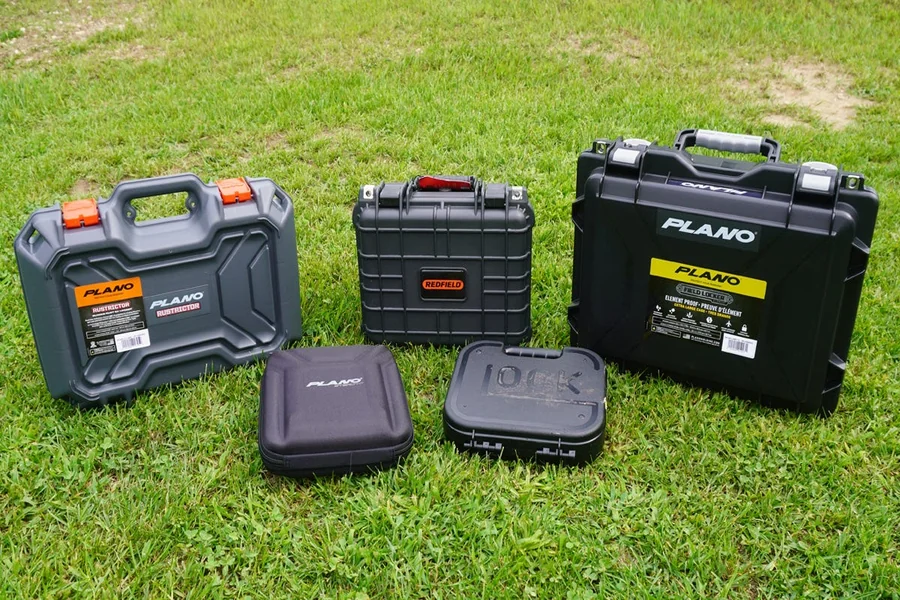
Choosing the right pistol case is a more involved decision than most buyers expect. A good case protects the firearm’s finish, keeps it secure during transport, and helps the owner stay compliant with storage and travel regulations. Narrowing down the options by fit, construction, and locking standards makes the process significantly more straightforward.
In This Article
Protection Standards That Matter
Owners evaluating a glock case for gun will find options engineered to the exact proportions of each Glock variant, removing the guesswork around interior clearance. Fit should be the starting point—a case built around specific frame dimensions keeps the pistol from shifting internally, which prevents scratches to the slide and damage to the sights. A precision foam cutout holds the pistol firmly without relying on straps or improvised padding.
Interior Foam and Impact Resistance
The foam lining carries most of the protective load inside any case. Closed-cell foam resists moisture and holds its shape under sustained pressure, making it a more reliable choice than open-cell versions. Egg-crate foam appears frequently in budget options but compresses unevenly with regular use. Precision-cut inserts provide consistent support and eliminate the internal movement that causes wear over time.
Outer shell material matters just as much. High-density polyethylene and reinforced polymer construction resist crushing forces that thin plastic shells cannot. Some manufacturers publish drop-test ratings for their cases, which gives buyers a concrete performance benchmark rather than a vague quality claim.
Weather and Dust Sealing
For anyone storing or transporting firearms in variable conditions, environmental protection is a practical concern. A rubber gasket running along the lid creates a seal that keeps out moisture and fine debris. This becomes especially relevant in humid climates or when cases spend time in vehicle trunks, where temperature swings regularly produce condensation. Sealing is not universal across product lines, so confirming it in the spec sheet before purchasing is a sensible habit.
Lock Standards and Compliance
TSA-Accepted Locks
Air travelers carrying firearms in checked baggage must use a hard-sided, lockable case. The Transportation Security Administration requires that only the passenger be able to open it, which rules out TSA master-key locks entirely. A hasp-style case that accepts a standard padlock is the correct configuration for compliant air travel.
Using two padlocks, one at each hasp point, satisfies most airline-specific requirements and adds a secondary layer of security. Reviewing the specific carrier’s policy in advance avoids last-minute issues at check-in.
Integrated vs. Padlock-Ready Designs
Cases come in two locking configurations: built-in combination or key locks and open hasps designed for external padlocks. Integrated locks offer convenience but become a liability if the mechanism fails, since replacement often means replacing the entire case. Padlock-ready hasps give the owner flexibility to upgrade the lock independently without retiring a functional case.
For stationary storage, cases with a cable loop or fixed anchor point can be secured to a structural object. This setup does not replace a dedicated gun safe but adds meaningful deterrence in spaces where a safe is impractical.
Sizing Considerations for Different Configurations
Full-size pistols require more internal volume than compact models, and that difference affects which foam inserts are compatible. Owners who carry accessories such as lights or extended magazines need to verify that the case can close fully with those items seated. Forcing a lid over an overfilled interior stresses the hinge and distorts the foam over time. Some manufacturers offer modular foam systems that let you remove sections for a custom fit.
Double-pistol cases work well for owners transporting two firearms at once, though the added size and weight make them less practical for routine range trips. A single-pistol case remains the better everyday option for most users.
Conclusion
A reliable pistol case earns its value through four qualities: accurate fit, durable construction, environmental sealing, and lock compliance. A case that checks all four protects the firearm, meets legal transport standards, and holds up through years of regular use. Buyers who prioritize these factors avoid the most common pitfalls, including cases that are too large, too fragile, or legally non-compliant. Making the right decision from the start is a simple way to protect both the firearm and the owner’s responsibilities.