A designer is preparing a new product prototype. An artist is creating a collectible figure. A hobbyist is experimenting with a personalized 3D printed object at home.In each situation, the creative process often begins with the same question: how can a digital idea become a real object?
Today, AI has made creating digital models faster than ever. Users can generate concepts, transform images into 3D assets, and explore creative possibilities without spending hours building everything manually.
However, when these ideas enter the real world of 3D printing, new problems appear.A model generated by AI may look impressive on a screen but still require additional work before printing. The structure may be difficult to manufacture, the surface details may not appear as expected, the colors may not transfer accurately, or the model may be too complex for a regular printer.These challenges show that the future of AI 3D printing is not only about generating models faster. It is about creating a complete workflow that connects digital creativity with physical production.
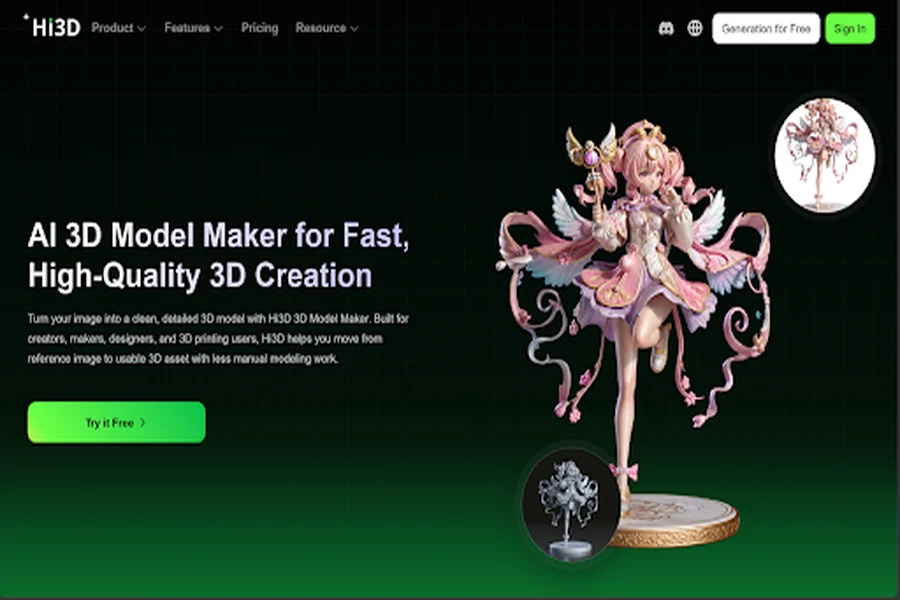
Hi3D is designed to solve this challenge. By combining AI-powered creation with practical printing features, Hi3D helps users transform ideas into printable models more efficiently and achieve better results in real-world applications.
In This Article
- The Real Challenges Behind AI-Powered 3D Printing
- Challenge One: Turning Simple Images Into Usable 3D Models
- Hi3D Makes Image-Based 3D Creation More Accessible
- Challenge Two: AI Models Often Lack Realistic Surface Details
- Enhancing Digital Models Through AI Texturing
- Challenge Three: Complex Models Are Difficult to Print Efficiently
- Making Large and Detailed Projects Easier With Model Separation
- Challenge Four: Digital Colors Are Hard to Reproduce in Physical Prints
- Bringing More Digital Creativity Into Physical Objects With Multi-Color Printing
- A Practical Example: Creating a Personalized 3D Printed Figure
- How Hi3D Supports the Future of Everyday 3D Creation
- Celebrate Hi3D Anniversary With 70% Off
The Real Challenges Behind AI-Powered 3D Printing
The growth of AI has changed how people approach 3D creation.In the past, creating a 3D model required professional modeling skills and extensive experience. Today, tools such as an AI 3D model maker allow more users to explore 3D design and generate models more easily.
However, AI generation is only one part of the entire process.A successful printed object requires more than a digital shape. Creators also need to consider the model’s structure, surface appearance, color design, and printing limitations.This is where many users encounter difficulties. The gap between an AI-generated model and a successful physical print remains one of the biggest challenges in modern 3D workflows.
Hi3D focuses on solving this gap by providing features that support creators throughout the entire process, from initial idea development to final printing preparation.
Challenge One: Turning Simple Images Into Usable 3D Models
Many creative projects start with a two-dimensional reference.A designer may have a product image. An artist may have a character illustration. A user may have a personal photo that they want to transform into a physical object.However, converting these images into 3D models has traditionally required advanced modeling skills.
Even with AI technology, creators still need a reliable way to transform visual concepts into usable 3D assets.
Hi3D Makes Image-Based 3D Creation More Accessible
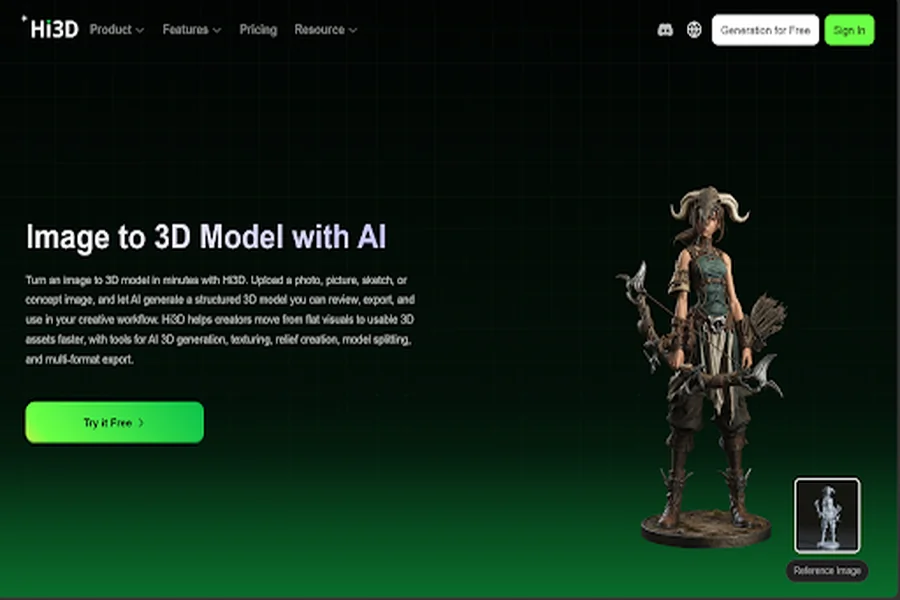
Hi3D provides a more intuitive approach through image to 3D model technology.By supporting workflows such as image to 3D, image to 3D model AI, photo to 3D model, and picture to 3D model, Hi3D allows users to explore new ways of creating three-dimensional objects from visual references.
For example, a product designer can use a concept image to develop an early prototype. A creator can transform artwork into a printable model. A beginner can experiment with 3D creation without spending months learning traditional modeling techniques.Technologies such as 2D image to 3D model and 2D to 3D image converter help make the transition from flat images to 3D objects more accessible, giving more people the opportunity to participate in digital manufacturing.
Challenge Two: AI Models Often Lack Realistic Surface Details
Shape is only one part of a successful 3D model.For many applications, especially character design, product visualization, and creative objects, surface details have a significant impact on the final result.An AI-generated model may have the correct overall structure but still require additional texture refinement to achieve a realistic appearance.
Traditional texture creation often involves manual editing and professional skills, which can slow down the creative workflow.
Enhancing Digital Models Through AI Texturing
Hi3D addresses this challenge through AI-assisted texture generation.Using technologies related to AI 3D texture generator, AI 3D model texture generator, AI texturing, and AI 3D model texturing, Hi3D helps creators improve the visual quality of their models.
For artists, this means creating more detailed and expressive digital assets. For designers, it provides a better way to visualize product concepts before production.AI texture enhancement reduces repetitive preparation work and allows creators to focus more on design decisions rather than spending excessive time refining surface details manually.
Challenge Three: Complex Models Are Difficult to Print Efficiently
One of the most common problems in 3D printing is handling complex designs.A digital model may contain detailed structures that look excellent on screen but become difficult to produce physically. Large models may exceed printer limitations, while complicated designs may increase printing difficulty.
Many users solve this problem by manually cutting models into different parts. However, this requires experience with professional 3D software and often involves repeated adjustments.
Making Large and Detailed Projects Easier With Model Separation
Hi3D helps simplify this process through intelligent model separation features.Instead of treating a complex object as one single piece, creators can prepare models as multiple components that are easier to print and assemble.
For example, a detailed character model can be divided into different sections, allowing each part to be produced more efficiently. This provides greater flexibility when working with larger creative projects.For professional designers, this improves prototype development efficiency. For hobbyists, it makes ambitious projects more achievable without requiring advanced modeling skills.
Challenge Four: Digital Colors Are Hard to Reproduce in Physical Prints
Color is another important factor that affects the difference between digital models and printed objects.In digital design environments, creators can use unlimited color combinations. However, physical printing requires more practical approaches to reproduce these visual details.Without proper preparation, a printed object may lose some of the original design’s visual impact.
Bringing More Digital Creativity Into Physical Objects With Multi-Color Printing
Hi3D helps creators better preserve their original design concepts through multi-color printing capabilities.
For character creators, this allows different visual elements such as clothing, accessories, and design details to be represented more effectively.For product developers, it provides more realistic prototypes that better reflect the intended appearance.
By connecting digital color design with physical printing, Hi3D helps creators achieve a smoother transition between creative concepts and finished objects.
A Practical Example: Creating a Personalized 3D Printed Figure
Consider a creator who wants to produce a personalized character figure based on an original illustration.In a traditional workflow, the creator may need to manually model the character, create textures, adjust colors, divide the model, and prepare the final print settings.This process can require significant time and technical knowledge.
With Hi3D, the workflow becomes more efficient.The creator can begin with an image-based process through AI 3D model maker technology and transform the reference image into a 3D model using image to 3D model capabilities.
After generating the model, AI texture features can improve the surface appearance. Multi-color printing support helps maintain the original visual style, while model separation makes complex structures easier to print.The result is a more complete path from creative idea to physical object.What once required multiple tools and complicated manual adjustments becomes a smoother AI-assisted 3D printing workflow.
How Hi3D Supports the Future of Everyday 3D Creation
As AI and 3D printing become more connected, these technologies are moving beyond professional environments and becoming part of everyday creative activities.People are using 3D printing for personalized products, creative hobbies, education, prototypes, and many other applications.
However, wider adoption requires tools that simplify the entire process.Hi3D provides this solution by combining AI generation, image conversion, texture enhancement, multi-color printing, and model preparation into one practical workflow.
Whether users are exploring a 3D printer model maker solution, searching for a free 3D model maker experience, or creating through a 3D model maker online platform, Hi3D helps reduce the technical barriers of modern 3D creation.As a complete 3D model maker AI solution, Hi3D allows more creators to transform digital ideas into physical reality.
-
Celebrate Hi3D Anniversary With 70% Off
To celebrate its anniversary, Hi3D is offering a special promotion for creators who want to explore AI-powered 3D creation.
During the anniversary event, users can enjoy 70% off and experience Hi3D’s complete AI-to-print workflow at a more accessible price.
This anniversary marks another step in making AI and 3D printing easier to access, helping more people turn their creativity into real-world objects.With Hi3D, the future of 3D creation becomes closer, simpler, and more achievable.